








Claire M is a long time member of Overeaters Anonymous. We discuss Claire’s personal journey with compulsive eating, including her history of emotional eating, weighing over 400 pounds, and how the OA program saved her life by helping her overcome addiction and anger. We talk about Claire’s extensive service work within the fellowship, detailing her progression from starting on phone meetings to becoming a highly involved member, including serving as the Virtual Region Chair for four years and now the Digital Coordinator.
Claire also discusses the upcoming Virtual Region convention and outlines newcomer outreach strategies, emphasizing the importance of service, commitment, and love in the recovery process.
Interviewer: In short, what is your story with compulsive eating?
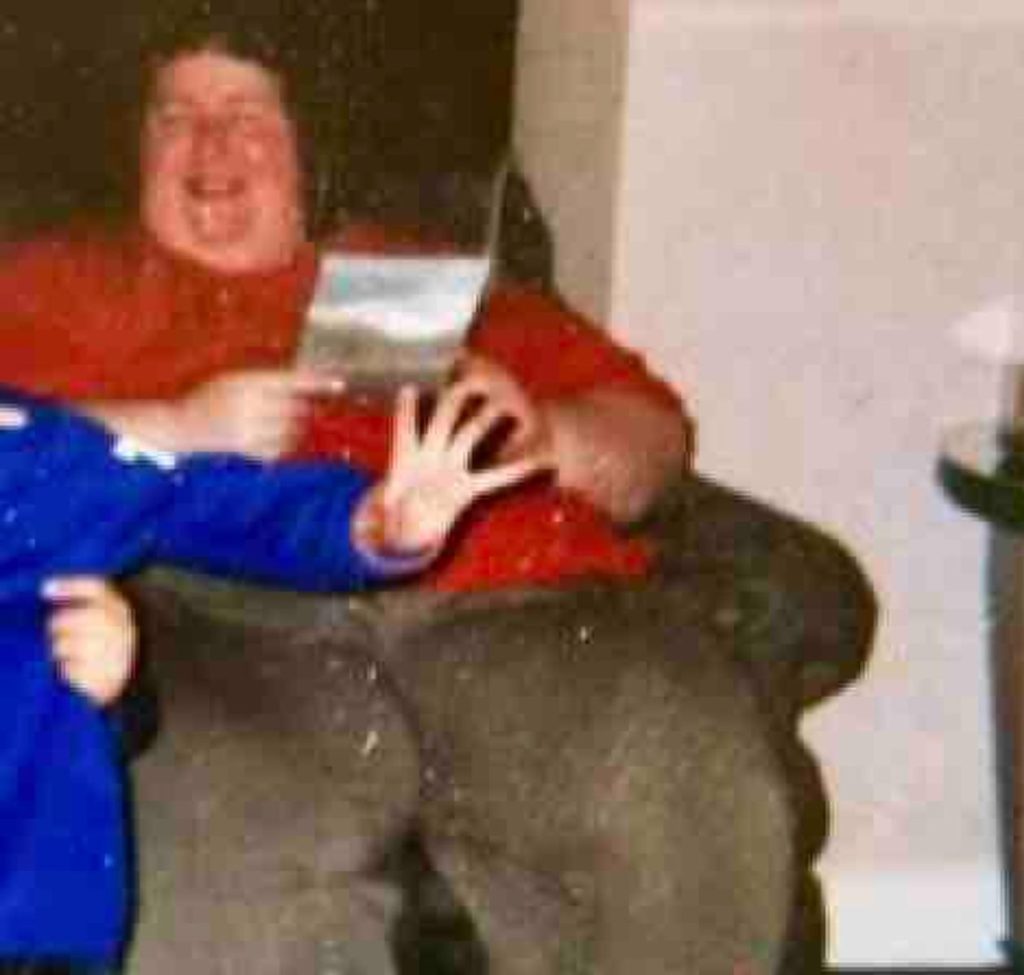
Claire: I started looking to food for comfort and numbing at a very young age. As an incest survivor, food became my security blanket. I eventually weighed over 400 pounds. My doctor couldn’t even weigh me on the office scale.
I gained and lost 100 pounds three times in my life, always gaining back even more in less time. I describe myself as the “jaywalker” in the Big Book because I kept crossing the street despite the danger and expecting different results. I developed endometrial cancer, which I knew was a risk caused by obesity, yet I still couldn’t stop compulsively eating. I was so large they didn’t even want to do surgery on me. I was killing myself slowly. Or not so slowly. With food.
I tried a million different things, came to OA for a short period, and left. I had a sibling that has been in program for over 30 years and abstinent, and I kept coming back. When I finally came back into the program, I couldn’t walk up a flight of stairs, and getting in and out of my car was painful. I used to look at places where I was going to see what the chair size was. I like to say I didn’t just “give away” 200 pounds. I gained over 200 pounds of love and sanity. At the time, the gift of desperation was my Higher Power.
Interviewer: What was the most difficult part of that journey?
Claire: The physical barriers were devastating. I used to have to find specific seats at business meetings because I didn’t fit in standard chairs, and I dealt with the pain of being unable to walk. But honestly, the hardest part was the anger and the “bottomless hole” inside me. You don’t realize how numbing the food is until you put it down.
Before I found a loving Higher Power, I was a “raving lunatic”. I lived in a place of anger, and dealing with that emotion without the numbing agent of food was incredibly difficult. I was isolated, not because I didn’t have friends, but because I was in self imposed isolation due to my size and what that entails.
Interviewer: What is your service journey?
Claire: I started on phone meetings because I literally couldn’t walk into a room and I was shy. I served as a moderator and helped with phone marathons, including the “100 pounder meeting”. Eventually, I was able to attend in-person meetings.
I started as a backup for the book person, dragging a rolling suitcase full of books to the meeting. I eventually became the book person and kept that service for a long time. That service saved my life because it forced me to show up early, learn the literature so I knew what I was talking about, and speak to every newcomer.
Later, I got involved with Region 6 and the Virtual Region simultaneously. I was really involved in the Public Information and Professional Outreach, PIPO group, for Region 6 and eventually became the Chair of PIPO and the chair of my local intergroup. I also was the representative for Region 6 and could not be a representative for the Virtual Region, so I was the Zoom host for the Virtual Region convention and served in the Unity with Diversity workshops.
I learned the hard way that I have to “weigh and measure” my service just like my food because I can do anything compulsively. I ended up helping chair the first Virtual Region Convention during the lockdown, which had over 2,500 attendees and involved pulling people out of the woodwork to do simultaneous interpretation in seven or eight languages.
I then served as the Virtual Region Secretary, which was funny because I am spelling dyslexic and had to recruit people to help me transcribe, and finally served as Region Chair for four years. Now, I am the Digital Coordinator, which is actually my dream job. I am also the liaison to the convention committee, and I recently worked with the team that created the videos for the annual appeal. That was really fun.
Interviewer: What challenges did you face in such a new and growing region, and what did you learn from them?
Claire: Being part of a region that is so new and growing is not without its challenges. We are often doing things that have never been done before, and that is not always easy for everyone.
I learned that I had to be okay with making mistakes. When you are doing something new, you are going to do things that don’t succeed. I realized that is okay because the success is in the process and what you learn from it. Most of our traditions and concepts were not born out of things going wonderfully. They were born out of conflict or problems.
Personally, this journey made me more accepting of myself. I learned not to hold myself, or anyone else, to a standard of perfection. It taught me to try, whenever possible, to come from a place of love.
That lesson really helped me in my personal life too. I learned that whenever I am struggling, if I go back to that place of love, there is always a better solution there. For me, that means turning to my Higher Power, or even just connecting to the universal source of love.
Interviewer: What keeps you going after all of these years of service?
Claire: To me, to compulsively overeat is to die, so my motivation is partly selfish. I want to live. Service gives me purpose. I still do a couple of newcomer meetings a week, and if I fade away from that, I get nervous about my recovery. I also ensure that during every convention I work on, I participate in a workshop or step study to get back to fundamentals.
Service also connects me to my Higher Power. If you had told me 10 years ago that I would have a strong spiritual program or that I wouldn’t eat a donut for 11 or 12 years, I would have laughed at you. Today, I truly have strong spiritual recovery and a god of my own understanding, one day at a time.
Interviewer: What was your favorite part of being the Chair of the Virtual Region?
Claire: It was the love. I asked myself recently, “Who gets to write a love letter to a couple thousand people?” and the answer was “Me”. Don’t get me wrong, I received hostility too, but the ton of love I received from the fellowship far outshined it. It was a beautiful experience to get to know so many people.
Interviewer: What inspires you about people?
Claire: I am inspired by the diversity of the Virtual Region. We come from places and circles where we might never have been friends otherwise, yet we share this common solution. My recovery has made me immensely more open to finding love and goodness in people. Even when people are nasty or we aren’t kind to one another, the kindness I see far outweighs those moments. Watching people transform in recovery is simply amazing. It is a gift.
Interviewer: What is the most satisfying part of being part of the Virtual Region?
Claire: It is beautiful to watch entire intergroups grow from just a few meetings to sometimes over one hundred. The most satisfying thing is our impact on newcomers. At every convention, without fail, I meet someone who tells me their abstinence date started at one of our previous conventions. If we help just one person become abstinent, we have done what we needed to do. I also love seeing our non-English speaking intergroups grow, like the Spanish meetings, which are bringing in crazy numbers of people.
Interviewer: How has service helped your recovery?
Claire: It helped me move from a place of anger to a place of love. Specifically, working through the sponsorship kit questions about applying spiritual principles was transformative for me. Service taught me that I don’t have to be perfect. I can make mistakes. I can be a jerk sometimes. But I have a program that allows me to make amends and do the next right thing. It taught me to love myself, which made me more open to loving others.
Interviewer: What is one thing, one action you would recommend today to a struggling compulsive eater?
Claire: I recently told a sponsee, you need to find a meeting you call “home”. Not just a place to sit and listen, but a place you go to every week and where you do service. That simple act is immensely powerful.
Next, find a sponsor. If the fit isn’t right, you are free to find another. It’s not a return store, but you need a good fit. Finally, do outreach. We tend to isolate, so pick up the phone and actually call someone. Don’t just text. If you commit to a plan of eating (even if your plan is not to have a plan cause you are restricting), have a sponsor and check in with your sponsor, and do service and share the tools, you are going to be abstinent, whatever that may be for you.
Interviewer: What would you like us to know about the Convention?
Claire: It is happening February 20th to 22nd. It is a massive event with over 70 sessions, including six keynote speakers and tracks that repeat the steps twice. We are targeting 900 newcomers this year.
Accessibility is huge for us. We will have simultaneous interpretation, translated captions, and this year we are asking people to read transcripts aloud for those who have trouble following along by reading. The theme uses the imagery of a tree, and it is like a “spiritual injection” for your recovery. It takes about 300 to 400 service people to run it, and we have 17 subcommittees, so we need help!
Interviewer: What are your future projects?
Claire: I am working on several initiatives. We hope to do some innovative things. Specifically, we are hosting a “Carry the Message” workshop in January. My heart is really in this work. While the region has created “bells and whistles” like radio ads, the fundamentally best way to carry the message is on a personal level and meeting level.
We are also launching a “print and post” campaign. We are creating posters in many languages with QR codes that members can print, even in black and white, and hang in their local areas, such as at doctors’ offices or with clergy. This supports local geographic intergroups and helps newcomers find meetings. Additionally, we are adding a radio public service announcement in Spanish and are currently translating and releasing our annual appeal videos in different languages.
Interviewer: Any last thoughts?
Claire: I am just so grateful and humbled by the amount of service people have given. People ask why the Virtual Region is growing, and I tell them it’s not just because we are virtual. It’s because we have been working so hard to carry the message.
The Virtual Region offers a comprehensive array of resources designed to attract and support newcomers. These range from large scale events to specific outreach materials and accessibility tools.
Events and Workshops
• The Annual Convention. Held in February, this major event includes a dedicated “Newcomer Center” which serves as a specific track for those new to the program. The convention features newcomer meetings, open speaker sessions, and workshops that repeat the Twelve Steps twice through different sessions.
• Newcomer Open Houses. The region hosts these events several times a year. Previously referred to as “newcomer marathons,” these involve holding one newcomer meeting after another, allowing potential members to see others in the same situation and encouraging them to keep returning.
• “Carry the Message” Workshop. This workshop, scheduled for January 10, is designed to teach individual members and meetings how to effectively carry the message to newcomers.
Outreach Materials and Campaigns
• Print and Post Campaign. The region is creating posters in multiple languages featuring QR codes. Members are encouraged to print these locally and display them in places like doctors’ offices, with clergy, or with social workers to help newcomers find information about the convention or local meetings.
• Radio Public Service Announcements (PSAs). The region has produced three radio PSAs in English for outreach and is currently adding one in Spanish.
• Social Media. The region conducts outreach on Facebook and is expanding to Instagram and Google.
• Video Resources. There are annual appeal videos that are currently being translated into various languages to reach a broader audience.
Accessibility Resources
To ensure newcomers from around the world can participate, the region invests heavily in accessibility.
• Simultaneous Interpretation. Used extensively at conventions, covering multiple languages, up to nine in previous years.
• Translated Captions and Transcripts. The region uses a business Zoom account to provide translated captions. They also utilize volunteers to read transcripts aloud simultaneously for those who have difficulty following along by reading.
Support Structures and Committees
• Specialized Committees. The Intergroup Outreach Committee (IGOR) and the Public Information and Professional Outreach (PIPO) committee work specifically on outreach strategies to bring newcomers into the fellowship
Read our New Section about Virtual Region News Corner
©2026 Experience Strength & Hope Newsletter,
All rights reserved. Proudly sponsored by OA Foot Steps VIG #09670.
Did you enjoy this article? We would encourage our members to use this post, and others like it, at their meetings, or for private reflection. We also encourage you to share this post to other fellows to help the compulsive eater who still suffers. Please let us know if you have an idea for an article or an upcoming theme, or have any questions or suggestions. Email our editorial staff at [email protected].
The experience, strength, and hope expressed in this article, reflect the individual OA members and does not represent OA as a whole. Other OA groups and service bodies are welcome to reprint articles from Experience, Strength & Hope Newsletter without permission. When reprinting from other OA newsletters, be sure to credit the source.